One system.
More of the human.
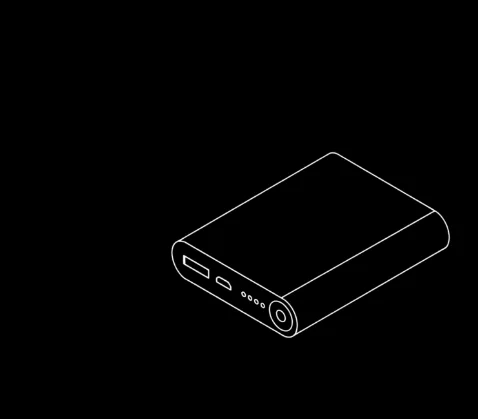
Glasses, an 8-channel sEMG wristband, and a compute puck. Three distinct instruments, designed to work together.
Discuss your setup
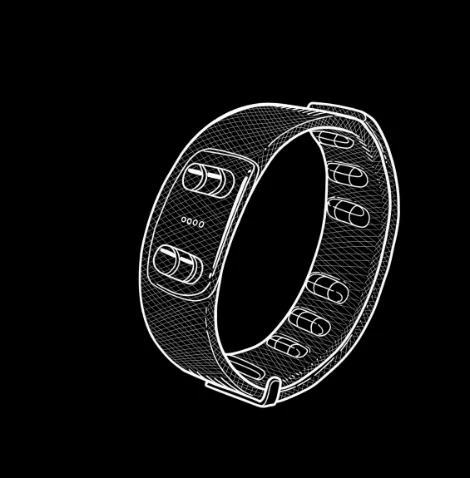 8-channel sEMG band
The world,
from your point of view.
Scene, gaze, audio and head movement in a familiar form.
Eye tracking
Gaze, fixations, saccades, blinks and pupil diameter. Eye cameras bring attention into the same frame of reference as the scene.
Scene capture
A forward-facing global-shutter camera records the world from the wearer’s perspective, aligned with gaze and movement.
Head motion
Inertial sensing adds the movement and orientation of the head to the visual record.
Spatial audio
Speech and ambient sound provide another layer of context around the task.
On-device processing
Processing on the frame supports pupil and gaze extraction alongside compressed scene video.
Touch input
A touch surface on the temple for event marking and control during a session.
Power + connectivity
The glasses connect to the portable recorder, with local power and storage designed to support recording continuity.
The effort
behind the action.
We’re designing an 8-channel sEMG band with PPG and IMUs to capture muscle activity, optical pulse signals and movement alongside the scene.
Muscle activity, at the wrist.
Surface electrodes record the electrical activity associated with muscle recruitment. These signals add effort-related information that motion and video alone can miss.
Measured: surface muscle activityHow firmly a part is held. When a grip engages. How effort changes through a press, twist or release.
The same movement can take a different effort.
force model
Adding force and contact context.
We’re developing models that combine wrist sEMG and motion to estimate fingertip force, calibrated for each wearer against reference measurements. These estimates add how people grip, press and release to the record of a demonstration.
Keep the compute
close to the context.
Carried on the body, the puck brings recording, a common clock and processing into the same session.
- Record
- Local storage for the session
- Align
- A master clock across the system
- Process
- On-body inference and signal handling
- Connect
- Interfaces for your host workflow
One moment.
A shared timeline.
Attention, movement and muscle activity become more useful when you know how they relate in time. The puck provides the common clock for the system.
A record you can build on.
Start with synchronized signals. Develop the interpretation and integration around the question you’re asking.
Recorded
Scene, gaze, audio, sEMG, PPG and motion, aligned within a session.
Derived
Attention, hand interaction, action boundaries and calibrated force estimates.
Connected
Session access and task-specific integration for your research or workcell.
A system that
moves with the task.
Glasses on the face. Band on the wrist. Puck at the belt or in a pocket.
Out in the field −
Record the task where it happens, with the compute carried on the body and a single cable between the glasses and puck.
At the bench +
Use a controlled setup for calibration, signal checks and comparison with reference instruments.
Calibrating the force model +
Force estimation needs paired reference measurements and calibration for the wearer. We’re developing this workflow as part of the band.
Your integration +
Talk with us about the signals, recording environment and software or robot controller your workflow uses.
Discuss your setupWhat could you learn
with these signals?
Tell us about the task, the sensing requirements, and the system you want to connect.
Discuss your workflow